Open and closed
Open, the display is there. Closed, the finish is what you see. The mechanism — sliding panels or motorized — is chosen for the screen, the clearances, and the room.
Reveal · concealed display
Reveal is the concealment system. Open, the display is in the room. Closed, the wall reads as a finish. Sliding panels or a motorized mechanism are reviewed for your screen. Send a photo and your email, or call.
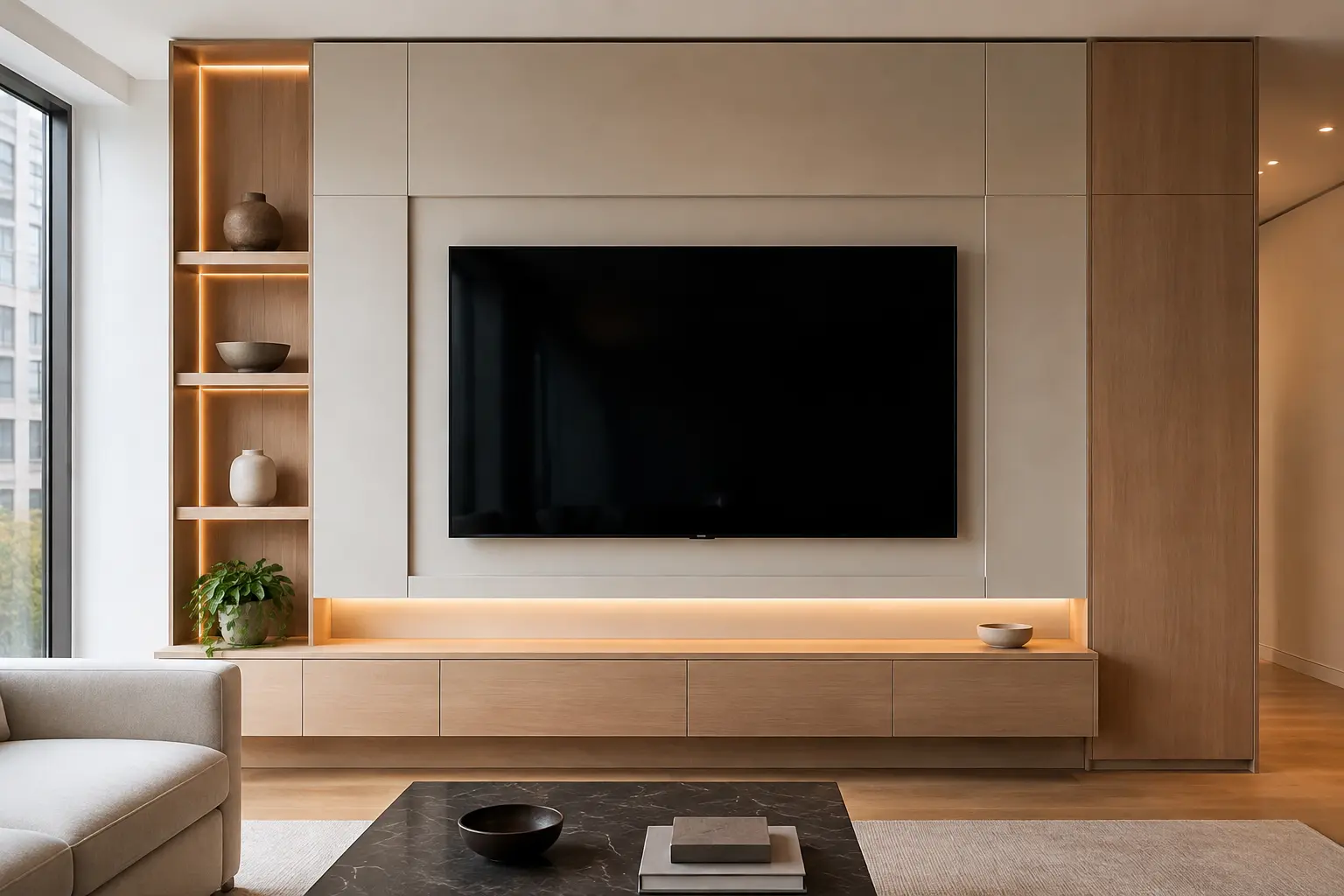
Designed for everyday use
Open, the display is there. Closed, the finish is what you see. The mechanism — sliding panels or motorized — is chosen for the screen, the clearances, and the room.
Plan closed storage for devices and cables, with optional shelving when you want to display something.
Moving parts, controls, ventilation and equipment access are planned together so the finished wall remains practical.
PartWall process
Send a photo, rough dimensions and your TV size. Tell us whether you prefer moving panels, a lift or help choosing.
We check the space, screen weight and clearances, then explain the suitable options, finish and project estimate.
The final design sets the fabrication plan. The installed mechanism and controls are tested with the selected screen.
Timing
The mechanism and finish determine the schedule. We confirm availability and the build window after reviewing the room and screen. Motorized systems also need time for setup and testing.
Your preferences
Frequently asked
Often, depending on the model and the chosen mechanism. We check screen dimensions, weight, connections and ventilation before confirming compatibility.
Ceiling-drop concepts are evaluated case by case because structure, clearances, access and building requirements vary.
The design includes a service-access strategy appropriate to the selected mechanism and finished wall.
Tell us what you have in mind